

Overview
Running an IT services business is about much more than delivering projects on time. Every engagement must contribute to sustainable growth and healthy margins. That is why Project P&L has become one of the most important metrics for founders, CEOs, and delivery leaders. While revenue figures may indicate business growth, Project P&L reveals whether individual projects are actually profitable.
Many IT services companies still depend on spreadsheets and disconnected systems to monitor financial performance. Unfortunately, these methods provide delayed insights and make it difficult to identify issues before they affect profitability. Understanding Project P&L helps organizations make better business decisions, optimize resource allocation, and improve long-term financial performance.
What Is Project P&L?
Project P&L, or Project Profit and Loss, is a financial statement that measures the profitability of an individual project. It compares the total revenue generated by a project against all associated costs, including employee salaries, contractor expenses, software licenses, infrastructure, travel, overhead, and other operational expenses.
Gain Complete Visibility Into Every Project
Stop relying on spreadsheets to understand project profitability. See your Project P&L, resource utilization, budgets, and business performance in real time with WorkXpace.
Unlike traditional financial reports that provide an organization-wide overview, Project P&L focuses on each project individually. This detailed visibility enables IT services companies to understand which projects generate profits, which consume excessive resources, and which require immediate attention.
A comprehensive Project P&L typically includes:
- Project revenue
- Direct labor costs
- Resource utilization
- Infrastructure expenses
- Vendor and software costs
- Project overhead
- Gross margin
- Net profitability
These metrics together provide a complete picture of project financial health.
Why Project P&L Matters for IT Services Companies
Every project has different requirements, team structures, timelines, and client expectations. Two projects with identical revenue can produce entirely different profit margins. This is where Project P&L becomes essential.
Without accurate Project P&L, founders often rely on assumptions instead of real financial data. Teams may celebrate project completion while unknowingly delivering work at minimal or even negative margins.
Tracking Project P&L helps organizations answer critical questions:
- Which clients generate the highest profits?
- Which projects consistently exceed budget?
- Are resources being utilized efficiently?
- Which delivery teams achieve the best margins?
- Where are unnecessary project costs increasing?
These answers directly influence business growth strategies.
Common Challenges Without Project P&L Visibility
Many growing IT services businesses struggle because financial information exists across multiple tools.
Project managers use project management software.
Finance teams work in accounting systems.
HR manages employee costs separately.
Sales tracks contracts inside CRM platforms.
Since this information remains disconnected, creating an accurate Project P&L becomes time-consuming and often outdated by the time reports are available.
Common problems include:
- Delayed profitability reports
- Manual spreadsheet consolidation
- Inaccurate resource costing
- Hidden project overruns
- Poor forecasting
- Limited executive visibility
Without real-time Project P&L, leaders often discover profitability issues only after project completion.
Follow the link to find the details on Why IT Services Billing Reconciliation Takes 3–5 Days Every Month.
How Real-Time Project P&L Improves Decision Making
Modern IT services organizations require instant financial visibility rather than month-end reporting.
A real-time Project P&L Dashboard enables founders to monitor project health as work progresses.
Instead of reacting after losses occur, leaders can proactively adjust delivery plans, resource allocation, pricing strategies, or project scope.
Real-time Project P&L allows organizations to:
- Monitor project profitability daily
- Compare actual costs against budgets
- Track resource utilization
- Identify margin erosion early
- Improve project forecasting
- Support faster executive decisions
This level of transparency reduces financial surprises and improves operational efficiency.

The Relationship Between Project P&L and Resource Utilization
People represent the largest cost in any IT services organization. Even small changes in resource allocation can significantly impact Project P&L.
For example, assigning senior consultants to work originally planned for mid-level developers increases project costs without increasing project revenue.
Similarly, underutilized employees reduce overall profitability.
Monitoring Project P&L alongside resource utilization helps leaders:
- Balance workloads
- Improve staffing decisions
- Increase billable utilization
- Reduce idle capacity
- Protect project margins
Organizations with better resource planning consistently achieve stronger Project Profitability.
Why Spreadsheets Are No Longer Enough
Many businesses still calculate Project P&L using Excel spreadsheets.
While spreadsheets work for small teams, they become increasingly unreliable as organizations scale.
Manual processes introduce:
- Formula errors
- Version conflicts
- Missing project costs
- Delayed reporting
- Inconsistent financial data
More importantly, spreadsheets cannot provide real-time Project P&L Dashboard visibility.
Today’s IT services companies require automated financial management that connects project delivery, finance, HR, CRM, and operations within one unified platform.
Key Metrics That Should Be Included in Every Project P&L Dashboard
An effective Project P&L Dashboard should provide much more than revenue and expenses.
Key metrics include:
- Project revenue
- Gross margin
- Net margin
- Billable utilization
- Resource costs
- Budget variance
- Forecasted profitability
- Time tracking
- Remaining project budget
- Client-wise profitability
These insights help executives identify opportunities for growth while minimizing financial risks.
How WorkXpace Simplifies Project P&L Management
Managing Project P&L should not require multiple disconnected applications.
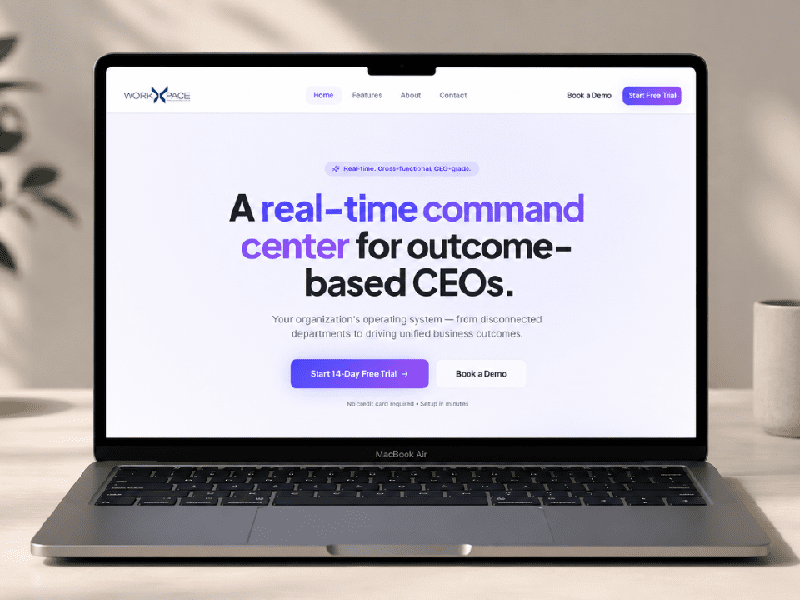
WorkXpace brings together project management, finance, resource management, time tracking, CRM, HR, and executive dashboards into a single platform.
Instead of waiting until the end of the month, founders gain real-time visibility into every project’s financial performance.
With WorkXpace, organizations can:
- Monitor Project P&L in real time
- Track project profitability automatically
- Improve resource utilization
- Compare planned versus actual costs
- Generate executive dashboards
- Eliminate manual spreadsheet reporting
- Identify risks before they impact margins
- Make faster business decisions using live data
This integrated approach helps IT services companies improve profitability while simplifying day-to-day operations.
Best Practices for Improving Project P&L
Improving Project P&L requires more than financial reporting. Organizations should establish processes that continuously optimize project performance.
Some proven best practices include:
- Track project costs daily rather than monthly.
- Monitor billable utilization across every team.
- Review budget variance during weekly project reviews.
- Use automated time tracking for accurate costing.
- Standardize project financial reporting.
- Build executive dashboards for leadership visibility.
- Forecast profitability throughout the project lifecycle.
- Integrate project management with finance and HR systems.
These practices create greater transparency and support sustainable growth.
Turn Every Project Into a Profitable One
Track Project P&L in real time, identify margin risks early, and make faster decisions with a unified executive dashboard built for IT services companies.
Conclusion
For IT services founders, growth is meaningful only when projects remain profitable. Revenue alone cannot determine business success. Project P&L provides the financial visibility needed to understand where profits are created, where costs are increasing, and which projects contribute the most to long-term growth.
As businesses expand, manual reporting and spreadsheets become barriers to timely decision-making. Investing in real-time Project P&L reporting, Project Profitability tracking, resource utilization monitoring, and an integrated Project P&L Dashboard allows leaders to make informed decisions with confidence.
WorkXpace empowers IT services companies with a unified platform that delivers real-time Project P&L, executive dashboards, project financial management, and business insights. With complete visibility into every project’s financial performance, founders can improve profitability, optimize operations, and build a stronger, more scalable business.